
Objective: Objective: develop the nanofabrication methods and fabricate several types of X-ray optics including zone plates, gratings, coded apertures, and others. The Optics group collaborates with various beamlines at APS and other Synchrotron facilities by providing the fabrication capabilities to support current programs and to develop new concepts. Optics are fabricated using Optics group resources and those at the Center for Nanoscale Materials (CNM). These capabilities have been used to advance X-ray science and will continue to be used to develop the next generation of nano-fabricated X-ray optics
|
Zone Plates: The primary nanofabricated X-ray optics development project involves focusing hard X-rays for sub-100 nm focus spots. Zone plates have been deployed at various beamlines at APS with outer zone width down to 16 nm [V. De Andrade, et al., Adv. Mat. 33.21 (2021), doi: 202008653], though 30-50 nm (Figure 1) are more commonly used. Zone plate can be designed specifically for the beamline and technique.
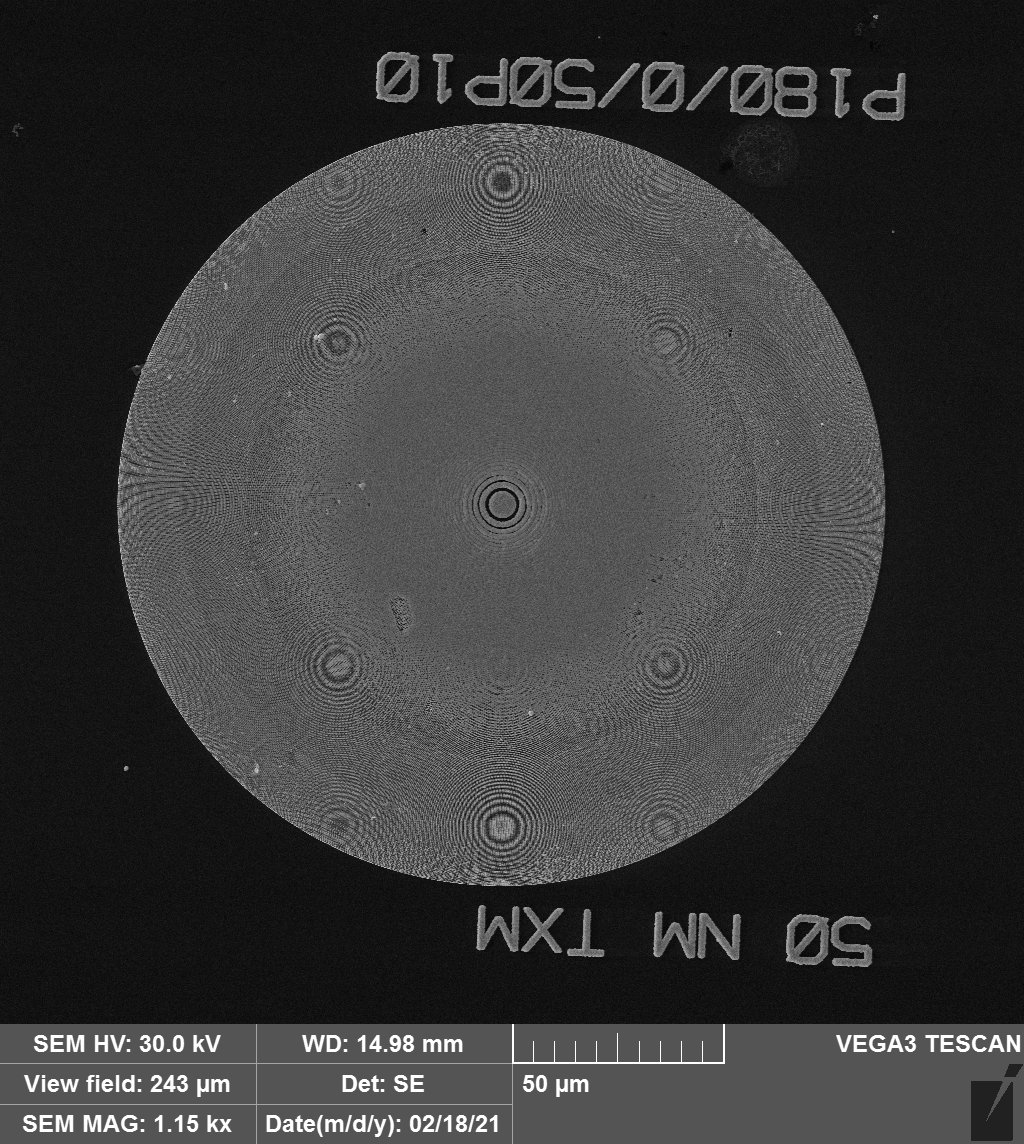 Figure 1: SEM image of a 50 nm zone plate, 180 µm diameter, and 1000 nm thick Au.

Figure 2: SEM images of a 20 nm outer zone width zone plate, 162 µm diameter, and 400 nm thick Pt zones.
|
Gratings and Coded Masks: in-house development of micron sized X-ray optics have included phase gratings for interferometry, coded masks for wavefront measurements, and coded apertures for depth resolved measurements. Fabrication methods and recipes for gratings [S. Marathe, et. al., J. Visualized Exp. 116, e53025 (2016) doi: 10.3791/53025] are applicable to a wide variety of samples for X-ray optics. Coded-mask-based multi-contrast imaging (CMMI) for X-rays was developed by the Optics group [Qiao, Zhi, et al., App. Phys. Let. 119.1 (2021): doi:10.1063/5.0053553.] (Figure 2); and used for imaging and wavefront measurements. Coded apertures have been fabricated for depth-resolved Laue diffraction (Gürsoy, Doğa, et al., J. of Appl. Cryst. 55, no. 5 (2022): doi: https://doi.org/10.1107/S1600576722007099) to increase the speed acquiring data by a factor greater than five, and the optic can be used for other depth-resolved imaging methods. Most 2-D micron sized pattern is likely possible, contact staff to discuss your particular project. 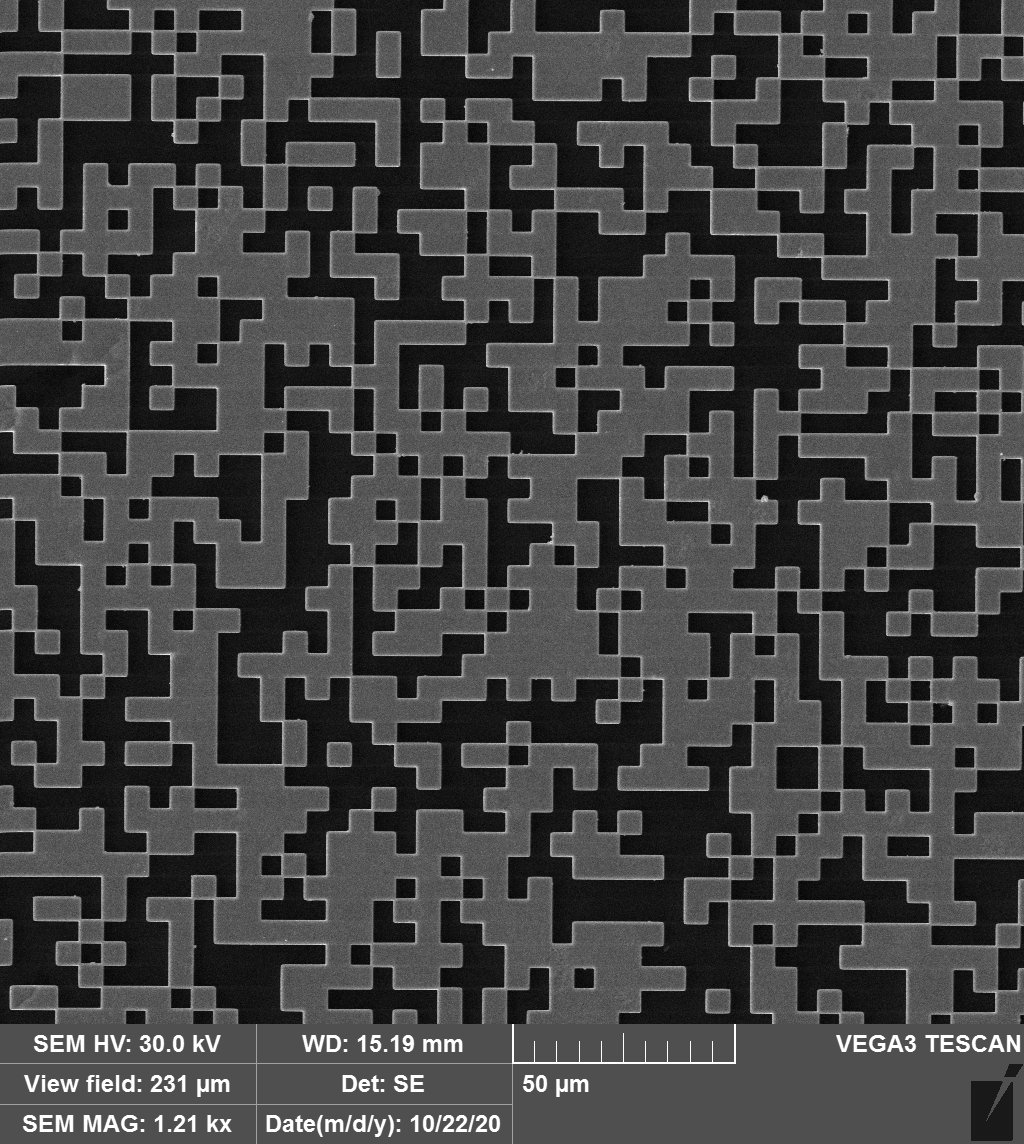
Figure 3: SEM image of a coded mask for CMMI, 5 µm code size and 2.5 µm thick Au structures
 Figure 4: SEM image of a coded aperture for depth resolved Laue microdiffraction, 7.5 µm code size and 7 µm thick Au structures |
Capabilities: The resources available and techniques developed include a wide array of materials and sample types.
|